For
The course is designed for cinema lovers, regardless of their level of advancement, filmmakers, other visual artists, journalists and film critics, future and current students of art universities.
Course description
Starting with the visual layer the film language, we will discover how the development of technology, innovation, creativity of filmmakers, inspirations from other fields of art and social changes shaped the language of film as we know it today. We will analyze selected titles (sequences, scenes, frames): classical, contemporary and independent film forms.
We will check how individual elements of the visual system in the cinema has developed - composition, light, frame geometry, spatial relations, color, camera movement, language of optics - and how these elements determined drama, narration, visual attention, commitment and emotions of the viewers.
The course also includes the visual characteristics of well-known cinematographers and photographers: Gregg Toland, Sven Nykvist, Nicholas Musuraca, Roger Deakins, Ellen Kuras, André Kertész, Robert Doisneau, Robert Capa, Brassaï.
After each meeting, students receive tasks for self-analysis in the form of stills and movie scenes.
Apply
1. FROM FUNCTIONALITY TO EXPRESSIVITY OF FILM FRAMES.
Case study: Billy Bitzer (first great cinematographer, collaborated with D.W. Griffith), Lois Weber (one of the first woman cinematographers in the cinema).
Composition: distance gradation and an introduction to the triangle rules.
What we teach: visual organization of static frames (distance) meaning for narration; framing the characters and the character's relationship with the environment; mise-en-scene; the tonality of the image and the placement of visual attention;
composition arrangements and the meaning and use of light.
2. DRAMATIZATION AND HANDLING OF THE ATMOSPHERE.
Case study: Karl Freund ("Metropolis"©Oscara® Winner), Fritz Wagner ("Nosferatu") (“The Cabinet of Dr Caligari”, “Die Nibelungen”, “Sunrise”). Buster Keaton (cinematographer, director and actor of his films, next to Charlie Chaplin the most visually creative slapstick character).
Composition: camera movement and composition creation.
What we teach: using light to dramatize and meaning an image; the role of stage design and theater lighting in the film, natural lighting vs characters lighting; the camera released from the tripod: camera movements and their meanings, drawing the film space with light, awareness of hiding and discovering information in the frame by movement. Visual effects in the American and German cinema of the 20s and 30s.
3. FROM SOFT IMAGE TO PERFECT CONTINUITY.
Case study: Gregg Toland ("Citizen Kane", "Long Journey Home", “Grapes of Wrath”). James Wong Howe (two-time © Oscara® winner).
Composition: 2 and 3 scenes. Principles of the composition of 'Golden Age Hollywood'.
What we teach: From a broad perspective to the essence of information. Camera movements and their meanings - smooth movements, tools. The depth of the film's dramatic effect; Optical language. The meaning and use of image softness vs. hard light. Image continuity and statements of images; visual sequence in Hollywood. Psychology and character representation.
4. THE MAGIC OF LIGHTING. SHAPING FRAMES WITH BLACKNESS.
Case study: John Alton ("The Big Combo", "T-Men", "American in Paris", © Oscar®winner, author of the first textbook for cinematographers 'Painting with light'); Nicolas Musuraca ("Cat People").
Composition: creating a staff space with light. Composition and light in building scenes.
What we teach: building mood and species, gradation of light, playing with optical layout, film language of category B films.
5. MEANING OF COLOR, TEXTURE AND COMPOSITION IN FRAME DESIGN.
Case study: Hitchcock and Robert Burks ("Rear Window", "Vertigo", "North by Northwest").
Composition: color and spatial relations.
What we teach: Color psychology. Film is more than realism. An interpretation of fear. P.O.V editing.
6. NEW FILM FORMATS: 70MM.
Case study:Freddie Young, winner of 3 ©Oscars® ("Lawrence of Arabia," "Doctor Zhivago," "Ryan's Daughter").
Master of lighting and facial expression: Sven Nykvist, cinematographer of Ingmar Bergman (" Persona, Fanny and Alexander ","Cries and Whispers ").
Composition: create compositions within a wide area of the frame. Wide frame and depth of field.
What we teach: Creating meaning and designing more film space; Creating emotions with light, illuminating the human face. What Bergman's films are about.
7. NEW LAYER OF MEANING. CONFLICT. OPEN COMPOSITIONS.
Case study: Vitorrio Storaro 3 © Oscars® winner ("Apocalypse Now", "Reds", "The Last Emperor") and Walter Murch, video and sound editor, 3 © Oscars® winner ("Apocalypse Now", "English Patient").
Composition: frame geometry; balance, symmetry, leading lines in the work of Vitorrio Storaro.
What we teach: film and borrowings from other arts (painting). Superimposing images, combinations - editing techniques. Intellectual uses of light.
8. TIME-SPACE ANALYSIS OF LONG SHOTS.
Case study: Angelopoulos ("Ulysses’ Gaze") , Tarkovski ("Mirror"), Lubezki ("Children of men", "Birdman").
Composition: intra-staff. 'Deep space composition'.
What we teach: Networking of narrative and visual attention with movement. Designing long shots.
9. SENSUAL FILMING IN THE ASIAN CINEMA.
Case study: Zhao Xiadoing ("House of Flying Daggers"), Peter Pau ("Crouching Tiger", "Hidden Dragon"), Wong Kar-Wai ("In The Mood For Love", "Chunking Express", "2046")
Composition: texture, texture and 'atmospherics' in the composition.
What we teach: emotions and the right choice of film language. Framing and camera movement in small spaces. Occlusions, smears, ways to deepen the image. Panoramic scanning. Film language and martial arts. Tempo, pacing, slow-mo - time in the works of Wong Kar-Wai.
10. UNREALISTIC IMAGE LAYER: VFX CHARACTERISTICS AND PROCESSING.
Case study: Claudio Miranda ("Life of Pi"), Andrew Lesnie ("Lord of the Rings").
Composition: composing visual effects with real shots.
What we teach: multiple exposure, miniatures, blue and green backgrounds, optical printing, matte painting; visual effects process: tracking, modeling, rigging, animation, texturing / shading, simulations, light rendering, compositing. Uncanny valley, digital actors.
Prowadzenie
Grzegorz Pamrów
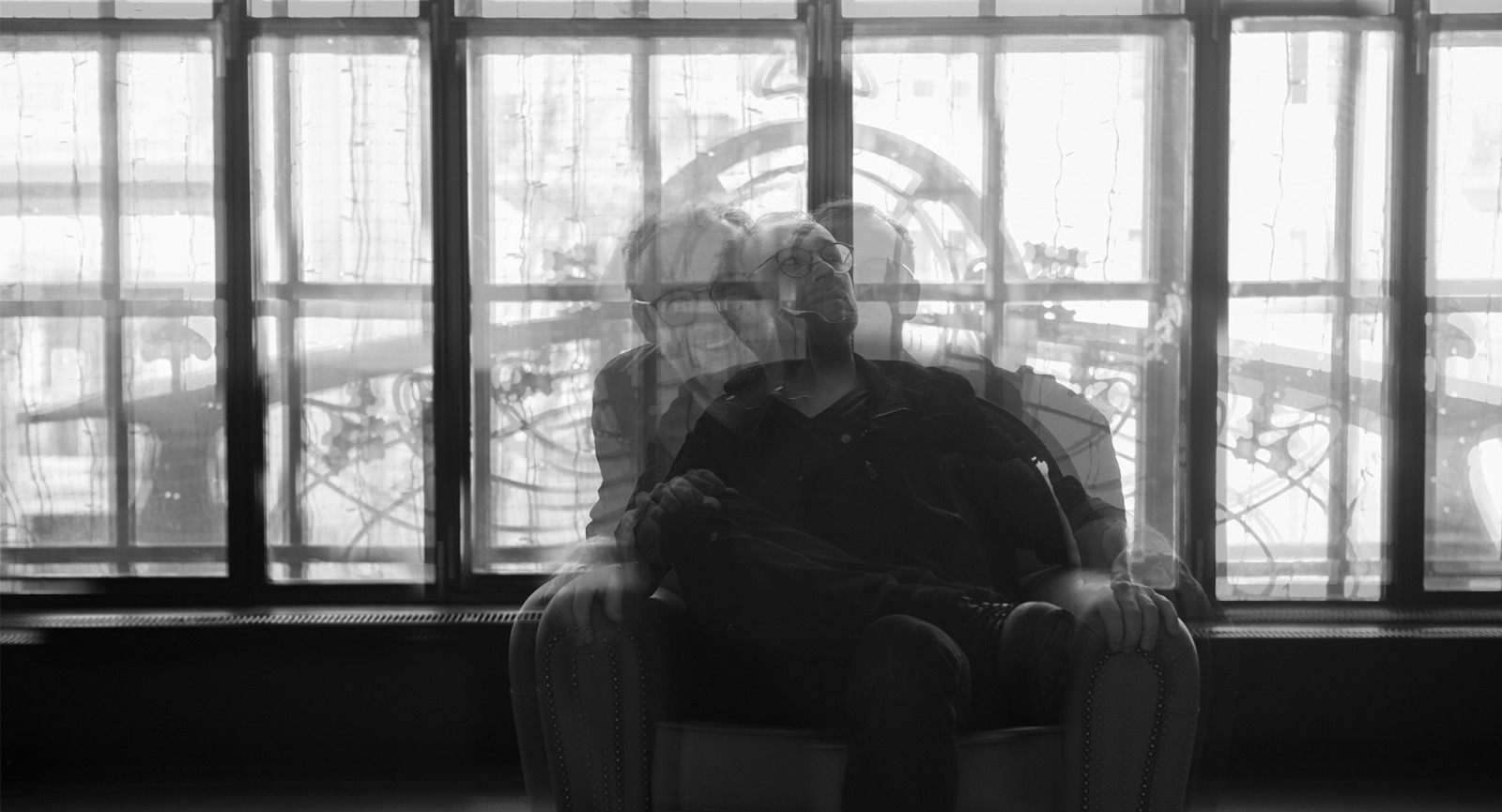
A graduate of the University of Sydney, Department of Art and Film Studies, and the Sydney Film School. He also graduated from the University of Warsaw and SWPS (faculty of linguistics and English). He took part in numerous film workshops organized by Universal Pictures (Australia). He collaborated with various universities and organizations, conducting courses on art,
film and medicine: audiovisual, music video analysis, animated film, Hollywood history, film perception, author's cinema, psychology and cinema. He was the Deputy Director of the Film Laboratory at SWPS (academic / scientific consulting center - over 50 film scripts and editing versions). Main areas of interest: aesthetics of film language, audiovisual perception, perception of the human body in relation to "non-organic" film elements, cinematography, film stories, creative thinking.
Start
Thursday 5 October 19:00 - 20:45
Price
399 EUR
Seats are limited and applicants will be handled on a first-come-first-service basis.
We reserve the right to cancel the course if there are not enough candidates.
Where
Online by ZOOM
10 meetings x 105 minutes
19:00 - 20:45 every Thursday
Apply

