Film & Painting online course

theory - practice

Course instructor

Grzegorz Pamrów

Start

Tuesday 24th September 2025.
Time (CET): 7:00 - 8:30 p.m.

WHERE

Online LIVE

COURSE MATERIALS AND RECORDINGS

Access to the recorded material is given for 7 days, after each meeting.

Price

399 EUR

Vermeer and Film


Vermeer and Hopper transformation


Get Course Preview!

For whom

For visual artists, filmmakers, art lovers, art students. The course may inspire any creative work.

Course description

The course is intended to stimulate visual, narrative and emotional imagination of filmmakers, visual artists and art lovers, and help them discover new ways of seeing visual art and reflecting on their own visual creations.

Based on hundreds of visual materials, we will focus on ways in which paintings influence and inspire the filmmaking process, film art: uses of in- and out-of-frame light sources, rules of composition and framing, synergies of space and color, compositional dynamics, visualizations of emotions, and more.

The course will also touch upon ways in which particular filmmakers, including cinematographers, directors, screenwriters and set designers, are inspired by paintings.

Enjoy art at stimulating online LIVE meetings with 7-day access to the recorded material.

Apply

Program

AT THE INTERSECTION OF PAINTING AND FILM COMPOSITION. STATIC AND DYNAMIC PAINTINGS WORTH BORROWING.

Case study: baroque, academism, 20th century painting trends. Comparison of painting and film language.
Topics: separation and superimposition of layers; technical and emotional meanings of depth and other compositional elements.

2. LIGHT PART I. TECHNIQUES AND INSPIRATIONAL TOOLS OF THE GREAT MASTERS. THE PHYSICALITY OF LIGHT. COMPARISONS OF PAINTING AND FILM LIGHT.

Case study: Vermeer, Rembrandt, Carravagio, Giotto and more.

Topics: use of light for dramatization and separation of painting and film frame; zonal light in composition, awareness of hiding and revealing information in the frame and painting with light.

3. LIGHT PART II. FROM PAINTING TO FILM FORM. THE IMPORTANCE OF LIGHT, VISUAL INSPIRATION. WAYS OF ACHIEVING PAINTERLY LIGHT IN FILM.

Case study: images and film fragments in comparative analysis.

Topics: relation of light to film narration and painting; how to technically obtain light from selected paintings.

4. THE PAINTING PERSPECTIVE AND THE WAY IT TELLS A STORY. THE PSYCHOLOGY OF SPACE AND CHARACTER RELATIONSHIPS. OPTICS AND ITS INFLUENCE IN PAINTING AND FILM. DIFFERENT VIEWING TECHNIQUES: CUBISTIC, IMPRESSIONISTIC, ETC.

Case study: Vermeer, Repin, Sergant, Impressionists and Post-Impressionists.

Topics: comparative analysis of painting and film in terms of perspective of setting (camera and easel); spatial relationships of figures and surroundings, other elements of composition that affect psychology and narrative.

5. THE EMOTIONAL-VISUAL DIMENSION OF TEXTURE AND MATERIALS DEPICTED IN PAINTINGS.

Case study: a cross-section of paintings in terms of texture, materials and setting, which determine the synthesis of the frame (shot).
Topics: the coherence of the above elements to create clear frames and shots for the narrative and visual language of the film.

6. FROZEN TIME - ELUSIVENESS OF THE FILM FORM CAPTURED IN PAINTINGS. WHAT DON'T FILMS SEE, AND WHAT DON'T PAINTINGS SEE?

Case study: renaissance, mannerism, classicism, romanticism.
Topics: psychology of emotions and character relationships, importance of emotions, composition resulting from movement and stillness.

7. COLOUR IN PAINTING AND FILM - LESSONS FROM THE POLISH MASTERS OF PAINTING.

Case study: Chełmoński, Malczewski, Siemiradzki, Gierymski, etc.
Topics: psychology and correlation of colour in film and painting; the influence of colour on composition and narrative.

8. BEYOND THE LIMITS OF REALITY - INSPIRATION FOR FILM. NARRATIVE AND VISUAL POSSIBILITIES OF STARTING A FILM SCENE THROUGH A PAINTING, EXERCISE.

Case study: Goya, Stuck, Munch, Beksiński, Bacon.
Topics: creation of narrative and visual scenes for a film, based on the paintings of the above-mentioned artists; development of visual creativity and points of view in the succinctness of a film scene and its dramatic construction.

What we teach

  • technical aspects of the languages of film and painting
  • reading and constructing the meaning of film and painting images, in their visual, narrative and emotional aspects
  • visual creativity
  • composition and symmetry of film and painting images; breaking and juxtaposing the rules of composition between the fields
  • basics of perception and colour psychology
  • the comparative nature of visual fields

Course instructor

Gregory Pamrów
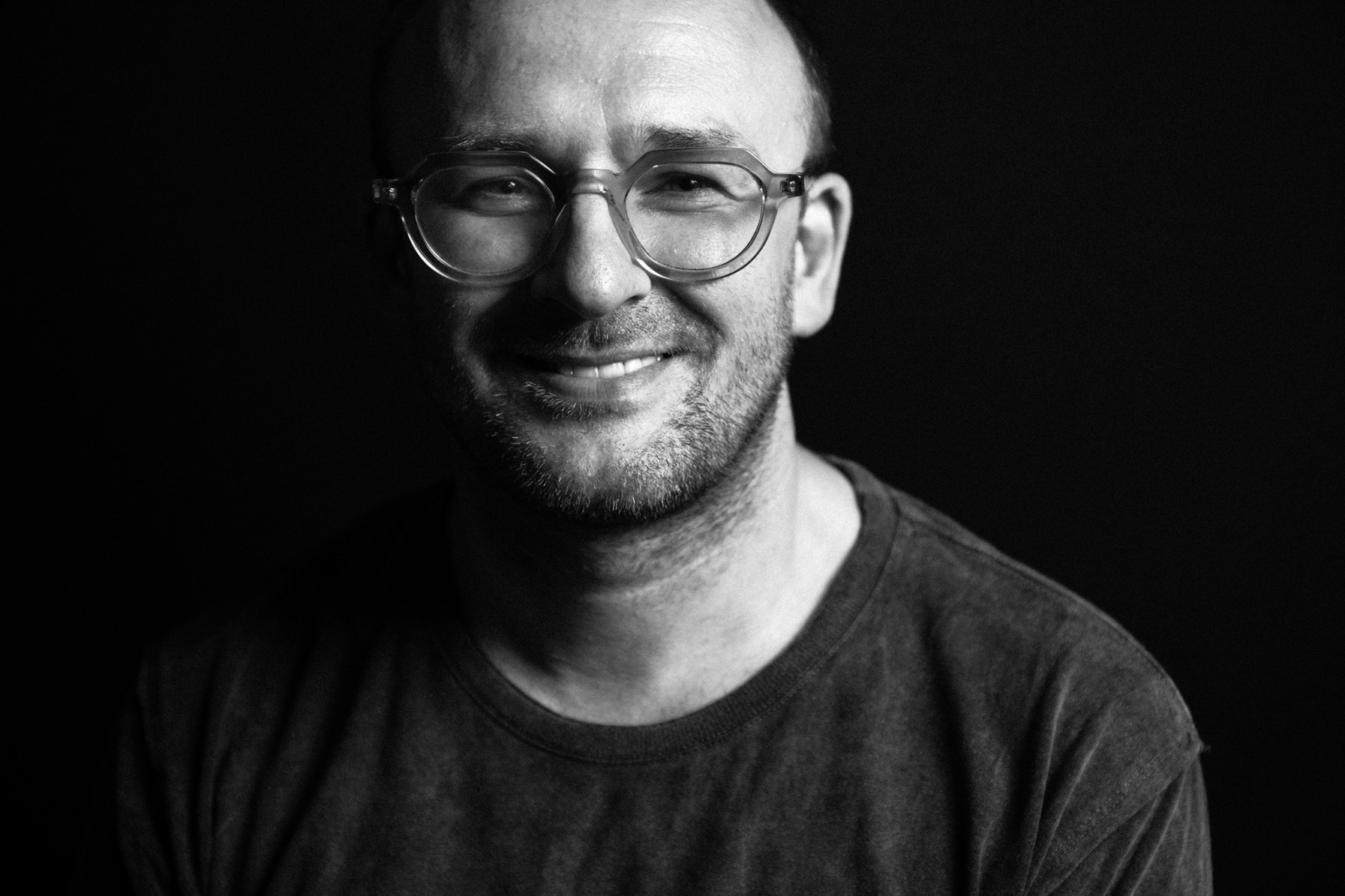
Graduate of the University of Sydney, Faculty of Arts and Film Studies, and the Sydney Film School. He also graduated from the University of Warsaw and SWPS (Department of Linguistics and English Studies). He has participated in numerous filmmaking workshops organised by Universal Pictures (Australia). He has collaborated with various universities and organisations, teaching courses on art, film: audiovisual, music video analysis, animated film, Hollywood history, film perception, auteur cinema, psychology and cinema. He was Deputy Director of the Film Lab at SWPS (academic / scientific consulting centre - more than 50 film scripts and editing versions). Main areas of interest: aesthetics of film language, audiovisual perception, perception of the human body in relation to 'inorganic' film elements, cinematographic art, film storytelling, creative thinking. Grzegorz is the creator of the cinematography course, where he teaches the theoretical part and cooperates with respected cinematographers in Poland and abroad. At Speakers' Avenue Grzegorz teaches: Film Image Analysis, Cinematography Course, Film Consulting at the Directors' Course, Film and Painting, Psychology of Film Characters.


Start

Tuesday 24th September 2025. Time (CET): 7:00 - 8:30 p.m.


8 meetings

– payment - 399 EUR (including VAT)

Where

Course online - LIVE
once a week, every Tuesday, Time (CET): 7:00 - 8:30 p.m.


Apply

Film&Painting

Formularz aplikacyjny

Error: Contact form not found.

Jeśli napotkałeś problemy z przetwarzaniem formularza, skontaktuj się z nami telefonicznie.